


Heavy equipment fabrication programs rarely succeed on piece price alone. The supplier also has to understand how the component will function, how tooling and materials affect repeatability, which downstream operations are required, and what production support will be needed after the first run. For manufacturers sourcing heavy equipment fabrication, those decisions can affect equipment uptime, production schedules, supplier coordination, and the reliability of future orders.
A dependable manufacturing partner should connect design requirements to a practical production path. Tempco Manufacturing supports industrial equipment supply chains with custom metal stamping, custom sheet metal fabrication, in-house tooling, production equipment, and value-added services for stamped and fabricated metal components.
Industrial equipment components often operate in demanding environments where fit, durability, repeatability, and delivery timing all matter. A bracket, housing, guard, panel, frame, mount, or fabricated assembly may be only one part of a larger machine, but a quality or supply problem with that component can still disrupt the larger program.
Heavy equipment fabrication also tends to involve more than one manufacturing decision. Material thickness, tolerances, forming requirements, tooling, welding, machining, finishing, assembly, and inspection may all affect how the part should be produced. A supplier that looks at those requirements as one connected process is better positioned to identify risks before they become production problems.
Tempco supports heavy equipment and industrial processing customers with components such as brackets and supports, electrical housings and enclosures, guards and shields, panels and covers, channels, frames, mounts, industrial machinery parts, and fabricated assemblies. The goal is not simply to make the first part, but to establish a repeatable path for future production.
A long-term production relationship starts before the purchase order. Ask whether the supplier reviews the drawing, material, critical dimensions, expected volume, end-use requirements, and downstream operations before committing to a process.
Early manufacturing input can help determine whether the part should be stamped, fabricated, formed, machined, welded, or produced through a combination of processes. It also gives engineering and procurement teams a chance to address features that may increase tooling complexity or create unnecessary secondary work before production begins.
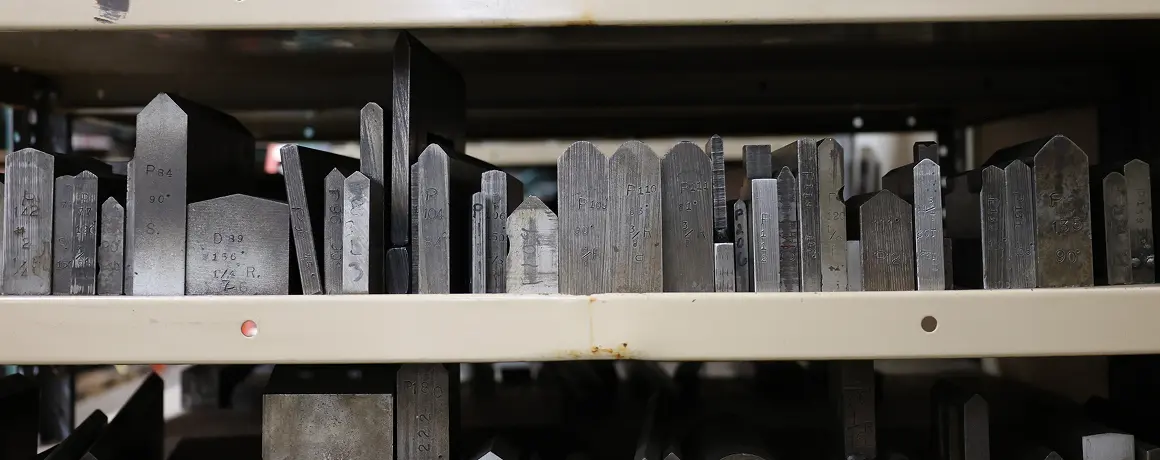
A supplier does not need every machine available. It needs the right tooling strategy and equipment for the component. Ask how the supplier plans tooling, how tooling changes or maintenance are handled, and whether the production equipment fits the part size, material, thickness, geometry, and expected volume.
Tempco brings precision tooling and fixtures together with production equipment so tooling decisions stay connected to production requirements. That can reduce supplier handoffs and make it easier to address changes or production issues over the life of a program.
Heavy equipment parts frequently require more than a single manufacturing step. A stamped component may also need forming, welding, machining, deburring, finishing, hardware installation, assembly, or other downstream work before it is ready for use.
Ask which operations are handled directly, which are coordinated through qualified outside processors, and who owns communication when multiple steps are involved. Tempco offers a range of value-added services that can help customers reduce outside processing needs and simplify supplier coordination.
Repeat production only works when the supplier can reproduce the part consistently. Buyers should understand how critical requirements are documented, how inspection expectations are communicated, and how the supplier responds when a process or part needs adjustment.
A strong supplier relationship should make quality responsibilities clear before production begins. Tempco supports customers with a documented quality manufacturing process designed around customer requirements, applicable standards, and continual improvement.
The first production run is only one test of supplier fit. Long-term programs may require repeat orders, tooling maintenance, changing lot sizes, revised schedules, or updated forecasts. Ask how the supplier plans for recurring work and what information it needs to respond when demand changes.
For procurement and operations teams, the key issue is predictability. A supplier should be able to explain how repeat orders move through the production process, how capacity constraints are communicated, and how changes are handled before they affect the delivery date.
Delivery performance starts with realistic expectations. A low quote or aggressive lead time does not help if the supplier does not communicate tooling status, material issues, outside processing, inspection requirements, or schedule changes early enough for the customer to react.
Before awarding a program, ask who owns the project, how updates are communicated, when risks are escalated, and how the team responds if a production milestone changes. Reliable delivery is usually the result of disciplined coordination rather than a promise made at the quoting stage.
A metal stamping shop that handles complex assemblies reliably should be able to coordinate tooling, stamping or fabrication, secondary operations, quality checks, and delivery under a clearly defined production plan. Buyers should look for one accountable team, documented requirements, repeatable processes, and clear communication across every handoff. If kitting is required, confirm that service explicitly rather than assuming it is included.
Complex parts become difficult when no one owns the complete manufacturing path. The supplier should understand which steps happen first, which requirements are critical at each stage, and who is responsible for coordinating the component through final inspection and shipment.
For industrial equipment components, that path may combine stamping, sheet metal fabrication, forming, machining, welding, finishing, and assembly. A partner that can coordinate those requirements as one program can reduce the number of disconnected conversations a purchasing or operations team has to manage.
When a component requires assembly or multiple secondary operations, ask how the supplier controls revisions, work instructions, inspection points, and movement between operations. The more complex the finished component, the more important it is to keep the drawing, tooling, process, and downstream requirements aligned.
Tempco supports fabricated assemblies and offers secondary capabilities including assembly, machining and milling, drilling and tapping, deburring and cleaning, welding, and finishing support. The exact process should still be matched to the requirements of the specific part.
Not every operation has to happen under one roof, but the customer should know who manages outside processing and how quality and schedule expectations follow the part. Ask whether the manufacturing partner coordinates approved outside services, how incoming and outgoing requirements are documented, and who communicates if an outside step affects timing.
A process that works once is not automatically a reliable production system. For repeat programs, ask how tooling is maintained, how revisions are controlled, how prior production knowledge is carried forward, and how the supplier prepares for recurring demand. Those answers reveal whether the supplier is thinking beyond the first shipment.
A supplier review is more useful when the conversation goes beyond “Can you make this?” Use the RFQ and qualification process to understand how the supplier will support the part over time.
Which manufacturing process do you recommend for this part, and why?
What tooling is required, who owns it, and how will maintenance or revisions be handled?
Which operations are completed in-house and which are coordinated externally?
How will critical dimensions and inspection expectations be documented?
What information do you need to plan repeat orders and changing volumes?
Who is the primary contact for production, quality, and schedule questions?
How are schedule risks or outside-processing delays communicated?
If assembly or kitting is required, what exactly is included in the quoted scope?
The purpose of these questions is not to create unnecessary process. It is to make sure the supplier has thought through the same risks that procurement, engineering, and operations teams will have to manage after the program launches.
Look for a supplier that can support repeatable production, maintain tooling, coordinate secondary operations, communicate capacity and schedule changes, and keep quality requirements consistent across future runs. Scalability is not only about making more parts. It is about having a process that remains controlled as order frequency, volume, or program requirements change.
Strong delivery performance usually comes from realistic planning, clear ownership, material and tooling readiness, controlled secondary operations, and early communication when a risk appears. Buyers should ask how the supplier tracks production milestones and how it responds when a schedule is at risk, not only what lead time appears on the quote.
Tier-2 suppliers should look for manufacturing fit, repeatability, responsive technical support, clear quality expectations, and a production partner that understands the downstream impact of missed requirements or deliveries. The right supplier should be able to support the component without adding unnecessary coordination burden to the tier-2 program.

Tempco Manufacturing supports industrial processors, heavy equipment OEMs, manufacturers, and supply-chain partners with metal stamping, sheet metal fabrication, in-house tooling, production equipment, and value-added services for custom components. Whether you are sourcing a new part, moving an existing program, or reviewing a supplier for repeat production, our team can help evaluate the manufacturing path and the requirements that matter before production begins.
Contact Tempco to discuss part complexity, tooling, production volume, secondary operations, and delivery requirements, or request a quote to start a project.
Tempco's fiber optic laser cutter is up to four times faster than conventional laser systems.
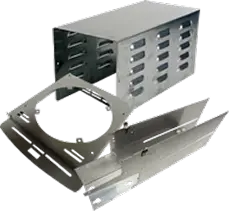
View Tempco's work gallery for examples of our metal stamping and metal forming expertise.
We produce tooling and fixtures in-house in our state of the art tool and die shop.